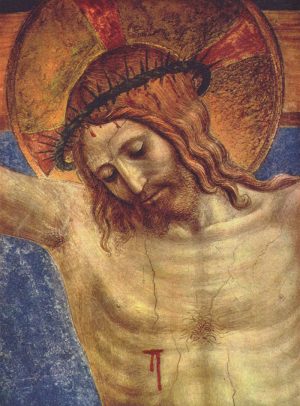
As we near the end of Holy Week and approach the Easter Triduum, we enter into the most sacred days of the year. These are the days in which Our Lord’s “hour” began and was accomplished: He was betrayed, He celebrated the First Mass and instituted the Sacraments of the Holy Eucharist and the Priesthood, He was arrested and abandoned, He freely gave Himself up to suffering and death for love of us, He descended into limbo to bring the souls of the just to heaven, and – finally – He rose victoriously from the dead, conquering sin and death and restoring the relationship between God and man that had been lost by Adam and Eve. This is a snapshot of the events of Holy Week and the Triduum.
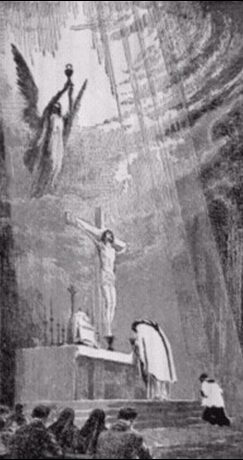 Before arriving at the glorious triumph of the Resurrection, we pass through two culminating points that, though seemingly different events, are one and same. These are the first celebration of the Holy Sacrifice of the Mass on Holy Thursday and the crucifixion and death of Our Lord on the Cross on Good Friday.
Though experienced in two different ways, both events are in reality one and the same Sacrifice. The Catechism of the Catholic Church tells us in #1367: “The sacrifice of Christ and the sacrifice of the Eucharist are one single sacrifice: ‘The victim is one and the same: the same now offers through the ministry of priests, who then offered himself on the cross; only the manner of offering is different.’ ‘And since in this divine sacrifice which is celebrated in the Mass, the same Christ who offered himself once in a bloody manner on the altar of the cross is contained and is offered in an unbloody manner. . . this sacrifice is truly propitiatory’ (Council of Trent).”
In order to enter more deeply into the mystery of these days in which the one oblation of Christ was accomplished, we share below some excerpts from Ven. Fulton Sheen’s short work Calvary and the Mass, a reflection on the seven words Our Lord spoke from the Cross applied to the Holy Sacrifice of the Mass.H
1st Word: “Father, forgive them…” | The Confiteor (or the Penitential Rite)
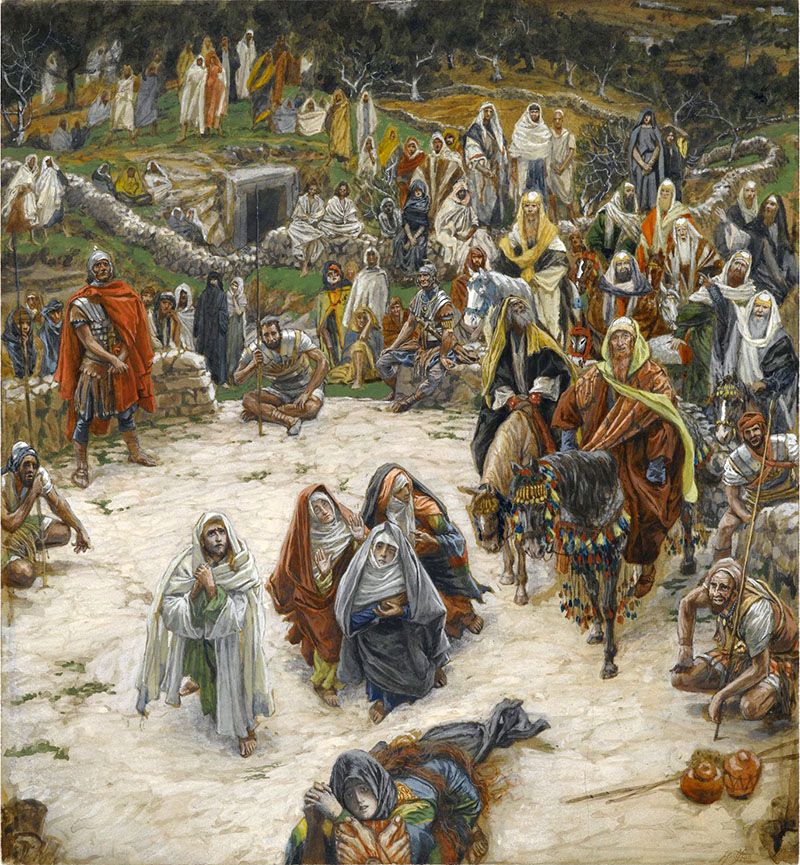
“That word ‘Forgive,’ which rang out from the Cross that day when sin rose to its full strength and then fell defeated by Love, did not die with its echo. Not long before that same merciful Saviour had taken means to prolong forgiveness through space and time, even to the consummation of the world. Gathering the nucleus of His Church round about Him, He said to His Apostles: ‘Whose sins you shall forgive, they are forgiven.’
“Somewhere in the world today then, the successors of the Apostles have the power to forgive. It is not for us to ask: But how can man forgive sins? – for man cannot forgive sins. But God can forgive sins through man, for is not that the way God forgave His executioners on the cross, namely through the instrumentality of His human nature?…
“…The Confiteor is at the foot of the altar our cry of unworthiness: the Confiteor from the Cross is our hope of pardon and absolution. The wounds of the Saviour were terrible, but the worst wound of all would be to be unmindful that we caused it all. The Confiteor can save us from that, for it is an admission that there is something to be forgiven – and more than we shall ever know.”
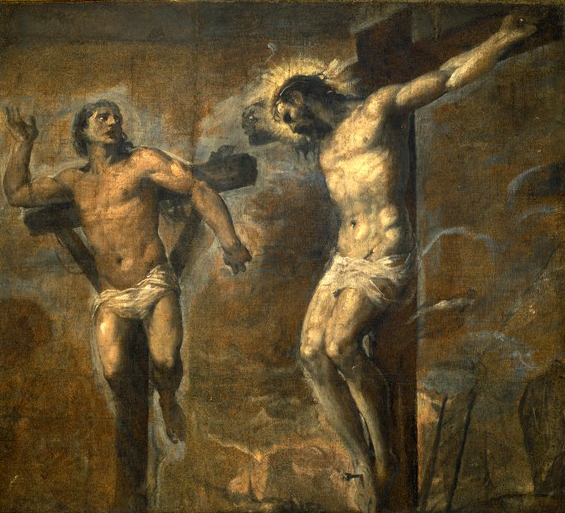
2nd Word: “This day you will be with me in paradise…” | The Offertory
Public domain
“With these words our Lord, who was offering Himself to His heavenly Father as the great Host, now unites with Him on the paten of the cross the first small host ever offered in the Mass, the host of the repentant thief, a brand plucked from the burning, a sheaf torn from the earthly reapers; the wheat ground in the mill of the crucifixion and made bread for the Eucharist.
“Our Lord does not suffer alone on the Cross; He suffers with us. That is why He united the sacrifice of the thief with His own. It is this St. Paul means when he says that we should fill up those things that are wanting to the sufferings of Christ. This does not mean our Lord on the cross did not suffer all He could. It means rather that the physical, historical Christ suffered all He could in His own human nature, but that the Mystical Christ, which is Christ and us, has not suffered to our fullness. All the other good thieves in the history of the world have not yet admitted their wrong and pleaded for remembrances. Our Lord is now in heaven. He therefore can suffer no more in His human nature but He can suffer more in our human natures.
“So He reaches out to other human natures, to yours and mine, and asks us to do as the thief did, namely, to incorporate ourselves to Him on the Cross, that sharing in His Crucifixion we might also share in His Resurrection, and that made partakers of His Cross we might also be made partakers of His glory in heaven.
“As our Blessed Lord on that day chose the thief as the small host of sacrifice, He chooses us today as the other small hosts united with Him on the paten of the altar…”
3rd Word: “Woman, behold thy son…behold thy mother…” | The Sanctus
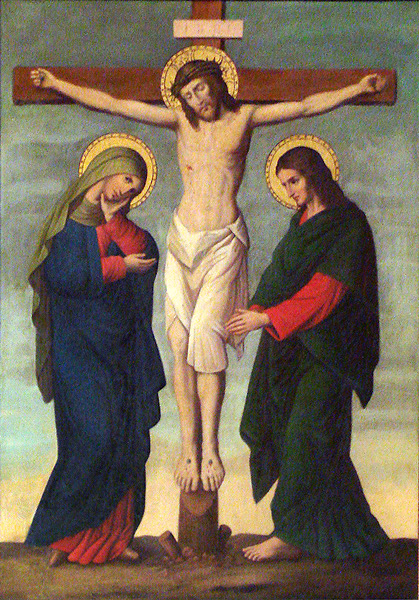
“And every victim must be holy…[but at] the Mass of Calvary…, [Christ] does not say ‘holy’ – He speaks to the holy ones; He does not whisper ‘Sanctus’ – He addresses Himself to saints, to His sweet Mother Mary, and His beloved disciple, John.
“Striking words they are: ‘Woman, behold thy son . . . behold thy mother.’ He was speaking now to saints. He had no need of saintly intercession, for He was the Holy One of God. But we have need of holiness, for every victim of the Mass must be holy, undefiled, and unpolluted. But how can we be holy participants in the Sacrifice of the Mass? He gave the answer: namely, by putting ourselves under the protection of His Blessed Mother. He addresses the Church and all its members in the person of John, and says to each of us: ‘Behold thy mother.’ That is why He addressed her not as ‘Mother’ but as ‘Woman.’ She had a universal mission, to be not only His Mother, but to be the Mother of all Christians. She had been His Mother; now she was to be the Mother of His Mystical Body, the Church. And we were to be her children…
“…She was to make us other Christs, for as Mary had raised the Holy One of God, so only she could raise us as holy ones for God, worthy to say Sanctus, Sanctus, Sanctus, in the Mass of that prolonged Calvary…
“…We are children of Mary – literally, She is our Mother, not by title of fiction, not by title of courtesy; she is our Mother because she endured at that particular moment the pains of childbirth for all of us. And why did our Lord give her to us as Mother? Because He knew we could never be holy without her. He came to us through her purity, and only through her purity can we go back to her. There is no Sanctus apart from Mary. Every victim that mounts that altar under the species of bread and wine, must have said the Confiteor, and become a holy victim – but there is no holiness without Mary.”
4th Word: “My God, my God, why hast thou forsaken me!” | The Consecration
“But why the cry of darkness? Why the cry of abandonment: ‘My God, my God, why hast thou forsaken me?’ It was the cry of atonement for sin. Sin is the abandonment of God by man; it is the creature forsaking the Creator, as a flower might abandon the sunlight which gave its strength and beauty. Sin is a separation, a divorce – the original divorce from unity with God, whence all other divorces are derived.
“Since He came on earth to redeem men from sin, it was therefore fitting that He feel that abandonment, that separation, that divorce. He felt it first internally, in His soul, as the base of a mountain, if conscious, might feel abandoned by the sun when a cloud drifted about it, even though its great heights were radiant with light. There was no sin in His soul, but since He willed to feel the effect of sin, an awful sense of isolation and loneliness crept over Him – the loneliness of being without God…
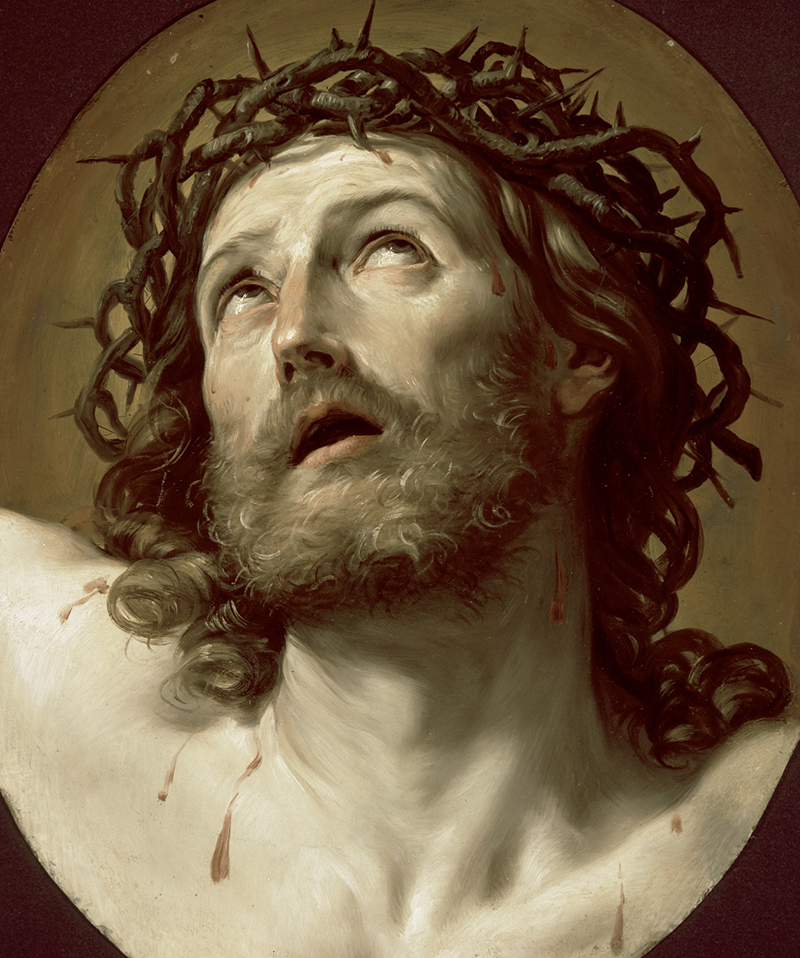
“…But in order better to reveal the intensity of that feeling of abandonment, He revealed it by an external sign. Because man had separated himself from God, He, in atonement, permitted His Blood to be separated from His Body. Sin had entered into the blood of man; and as if the sins of the world were upon Him, He drained the chalice of His Body of His sacred Blood. We can almost hear Him say: ‘Father, this is My Body; this is My Blood. They are being separated from one another as humanity has been separated from Thee. This is the consecration of My Cross’…
“…On the cross our Blessed Lord was looking forward to you, hoping that one day you would be giving yourself to Him at the moment of consecration. Today, in the Mass, that hope our Blessed Lord entertained for you is fulfilled. When you assist at the Mass He expects you now actually to give Him yourself…
“…Such is the purpose of life! To redeem ourselves in union with Christ; to apply His merits to our souls by being like Him in all things, even to His death on the Cross. He passed through His consecration on the Cross that we might now pass through ours in the Mass.”
5th Word: “I thirst.” | The Communion
“Our Blessed Lord reaches the communion of His Mass when out from the depths of the Sacred Heart there wells the cry: ‘I thirst.’ This was certainly not a thirst for water, for the earth is His and the fullness thereof; it was not a thirst for any of the refreshing droughts of earth, for He calmed the seas with doors when they burst forth in their fury. When they offered Him a drink, He took it not. It was another kind of thirst which tortured Him. He was thirsty for the souls and hearts of men.
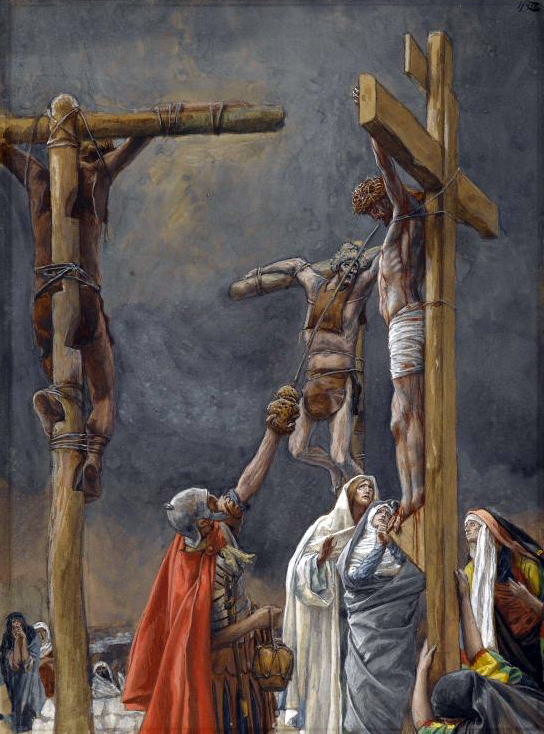
“The cry was a cry for communion – the last in a long series of shepherding calls in the quest of God for men. The very fact that it was expressed in the most poignant of all human sufferings, namely, thirst, was the measure of its depth and intensity. Men may hunger for God, but God thirsts for men. He thirsted for man in Creation as He called him to fellowship with divinity in the garden of Paradise; He thirsted for man in Revelation, as He tried to win back man’s erring heart by telling the secrets of His love; He thirsted for man in the Incarnation when He became like the one He loved, and was found in the form and habit of man.
“Now He was thirsting for man in Redemption, for greater love than this no man hast, that he lay down his life for his friends. It was the final appeal for communion before the curtain rang down on the Great Drama of His earthly life. All the myriad loves of parents for children, of spouse for spouse, if compacted into one great love, would have been the smallest fraction of God’s love for man in that cry of thirst. It signified at once, not only how much He thirsted for the little ones, for hungry hearts and empty souls, but also how intense was His desire to satisfy our deepest longing.
“Really, there should be nothing mysterious in our thirst for God, for does not the hart pant after the fountain, and the sunflower turn to the sun, and the rivers run into the sea? But that He should love us, considering our own unworthiness, and how little our love is worth –! And yet such is the meaning of God’s thirst for communion with us…
“…And it is just that which makes man all the more mysterious! Why man should be loved is no mystery, but why he does not love in return is the great mystery. Why should our Lord be the Great Unloved; why should Love not be loved? Why then, whenever He says: ‘I thirst,’ do we give Him vinegar and gall?”
6th Word: “It is finished.” | “The Mass is finished…”
“Our Blessed Saviour now comes to the Ite, missa est [‘the Mass is finished’] of His Mass, as He utters the cry of triumph: ‘It is finished.’… What is finished? The Redemption of man is finished. Love had completed its mission, for Love had done all that it could…
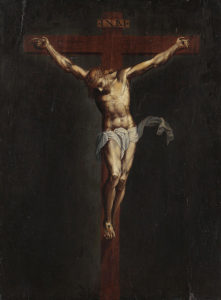
“…Our Lord finished His work, but we have not finished ours. He pointed the way we must follow. He laid down the Cross at the finish, but we must take it up. He finished Redemption in His physical Body, but we have not finished it in His Mystical Body. He has finished salvation, we have not yet applied it to our souls. He has finished the Temple, but we must live in it. He has finished the model Cross, we must fashion ours to its pattern. He has finished sowing the seed, we must reap the harvest. He has finished filling the chalice, but we have not finished drinking its refreshing draughts.
“He has planted the wheat field; we must gather it into our barns. He has finished the Sacrifice of Calvary; we must finish the Mass…
“…This world of ours is full of half-completed Gothic cathedrals, of half-finished lives and half-crucified souls. Some carry the Cross to Calvary and then abandon it; others are nailed to it and detach themselves before the elevation; others are crucified, but in answer to the challenge of the world ‘Come down,’ they come down after one hour. . . two hours. . . after two hours and fifty-nine minutes. Real Christians are they who persevere unto the end. Our Lord stayed until He had finished.
“The priest must likewise stay at the altar until the Mass is finished. He may not come down. So we must stay with the Cross until our lives are finished. Christ on the Cross is the pattern and model of a finished life. Our human nature is the raw material; our will is the chisel; God’s grace is the energy and the inspiration.”
7th Word: “Father, into thy hands I commend my spirit.”
“…He now goes back to the Father whence He came. He has completed His work. He began His Mass with the word: ‘Father.’ And He ends it with the same word…
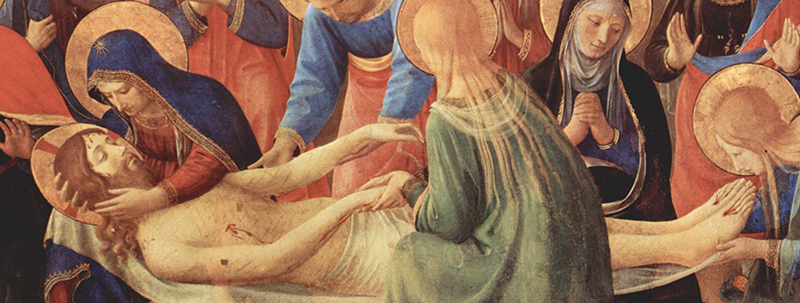
“…And now that the Mass is over, and He has commended His Spirit to the Father, He prepares to give back His Body to His Blessed Mother at the foot of the Cross. Thus once again will the end be the beginning, for at the beginning of His earthly life He was nestled on her lap in Bethlehem, and now, on Calvary, He will take His place there once again…
“…Mary looks up into His eyes which are so clear even in the face of death: ‘High Priest of Heaven and earth, Thy Mass is finished! Leave the altar of the Cross and repair into Thy Sacristy. As High Priest Thou didst come forth from the sacristy of Heaven, panoplied in the vestments of humanity and bearing Thy Body as Bread and Thy Blood as Wine…And you, friends of the Crucified, your High Priest has left the Cross, but He has left us the Altar. On the Cross He was alone; in the Mass He is with us. On the Cross He suffered in His physical Body; on the altar He suffers in the Mystical Body which we are. On the Cross He was the unique Host; in the Mass we are the small hosts, and He the large host receiving his Calvary through us. On the Cross He was the wine; in the Mass, we are the drop of water united with the wine and consecrated with Him. In that sense He is still on the Cross, still saying the Confiteor with us, still forgiving us, still commending us to Mary, still thirsting for us, still drawing us unto the Father, for as long as sin remains on earth, still will the Cross remain.”
Public Domain