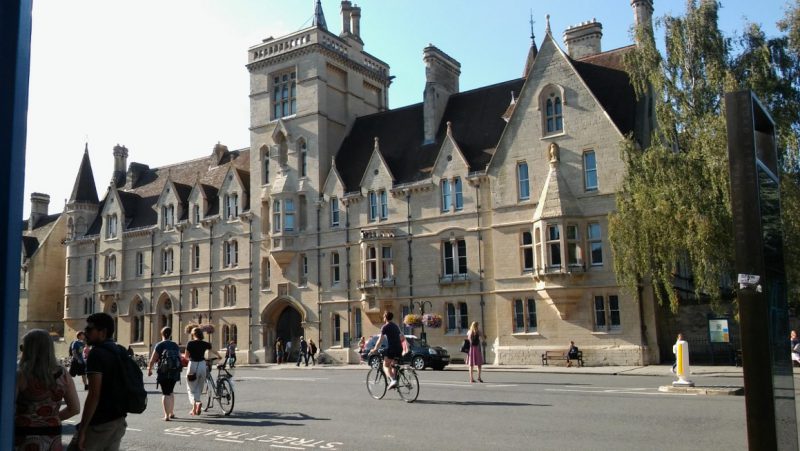
“Oh, to be in England”…once when it was August!
(Alas, the Oxford Patristics Conference is not held in April…and the current climate of darkest winter and cultural uncertainty do not call me thither “now that it is” January. No doubt Browning would understand.)
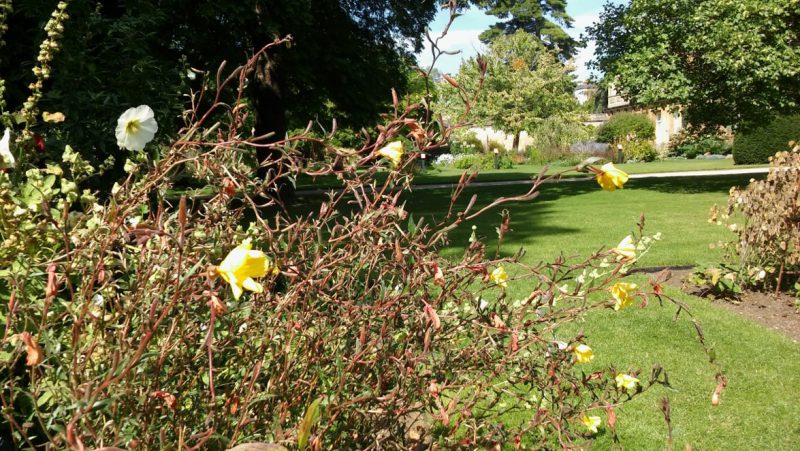
But as 2019 draws to a close and 2020 gets started, I turn my thoughts back to lovely summer days at Oxford, to the martyrs of the Tyburn Tree and to the university haunts of Saint John Henry Newman.
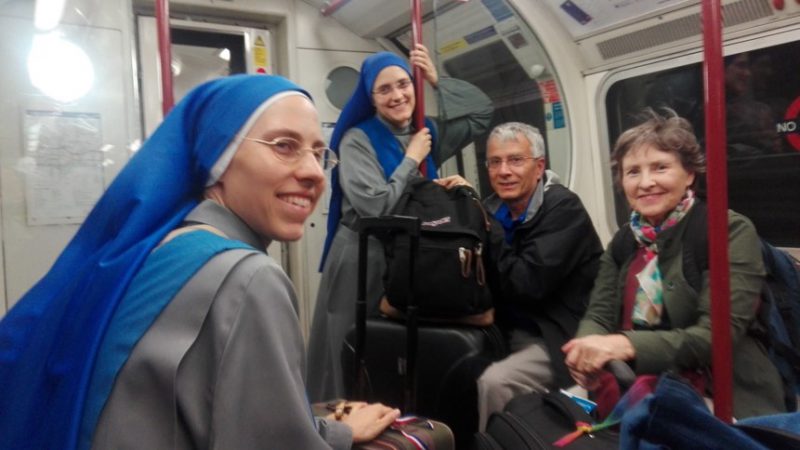
Three of our American sisters came together in England this past August to participate in the International Patristics Conference held every four years in Oxford: Sr. Maria del Fiat Miola, SSVM (missionary in Italy), Sr. Maria Panagia Miola, SSVM (missionary in Italy), and myself, Sr. Maria Theotókos Adams, SSVM (missionary in USA).
In the over-grown late summer days we were able to extend the trip to include a few days in London with their parents (the tail-end of a family vacation—yes, these two are “blood sisters” as well as sisters in religion). Then we all spent nearly a week together in a neighborhood flat in Oxford while each one — both parents are professors as well — saw to our respective research, meetings, and conference activities.
London
First, we were blessed to stay with Benedictines nuns at their Tyburn Convent named in honor of the nearby place of the martyrs, the notorious Tyburn Tree. This place of the ‘King’s Gallows’ saw the death of 105 Catholic Martyrs killed for their faith between 1535 and 1681 during the period of the Reformation, as well as the execution of thousands of various criminals between 1196 to 1783. It is a stirring place of prayer, memory, and endurance of faith in our own highly secularized times. A pilgrimage spot of its own right! Take the on-line digital “tour” of the Martyrs’ Shrine.
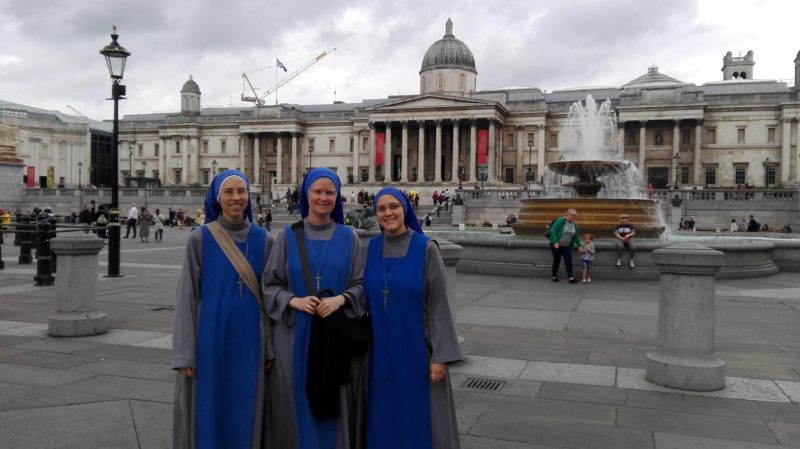
During our days in London we especially sought out culture and the arts. We visited the National Gallery, made it to one of the famous midday free concerts at Saint Martin in the Fields close-by, and were treated to live Shakespeare in the rebuilt open-air Globe Theatre.
Oxford and Patristics
Once in Oxford, we had work to do, and work we did! Each one of us had come to the International Conference on Patristic Studies as both participant and presenter. Final polished version, edited handouts, and anticipated questions all filled our minds up to our own presentation hours.
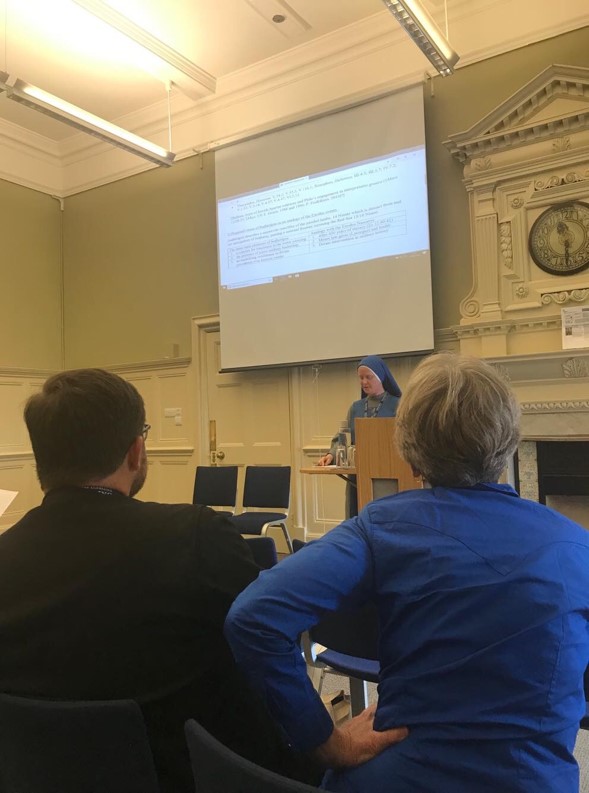
Ironically, we all were designated to present during the exact same time sessions, so none of us could attend one another’s presentations. (The abstracts of our academic presentations can be found on the Conference blog: Sr. Fiat, Sr. Panagia, Sr. Theotókos.)
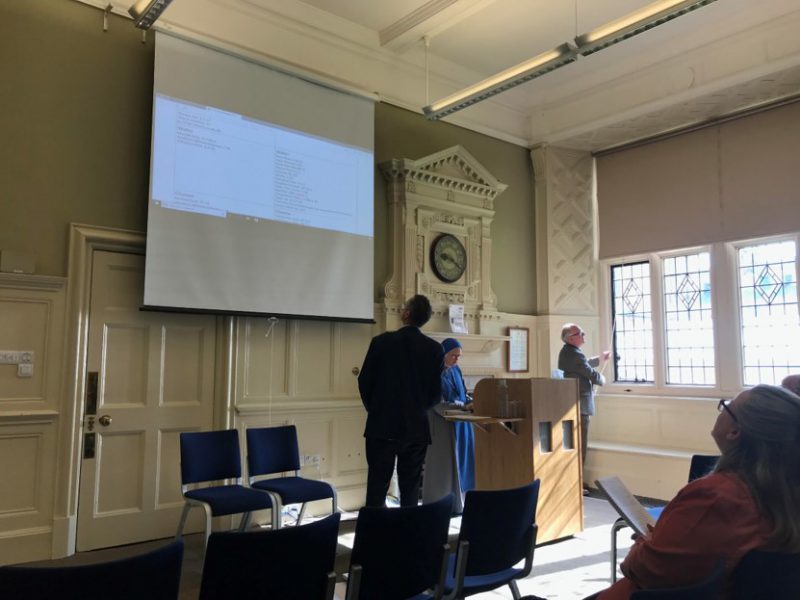
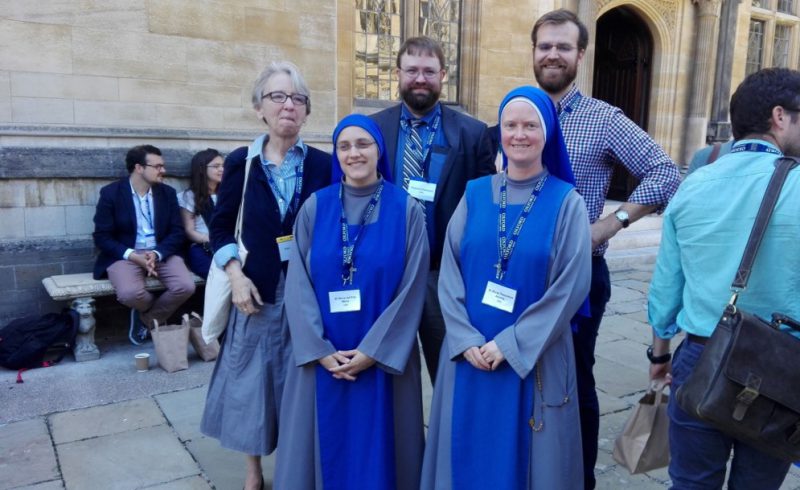
A special feature of the Conference was the sense of institutional collegiality among scholars — Sr. Fiat completed her PhD at The Catholic University of America in 2018, where I continue to work on mine.
John Henry Newman and Oxford
Every day on our way to the Conference sessions at Examination Hall on High Street we would walk past at least three major Newman sites: the Oratory, the “Martyrs Shrine,” and the Church of Saint Mary the Virgin.
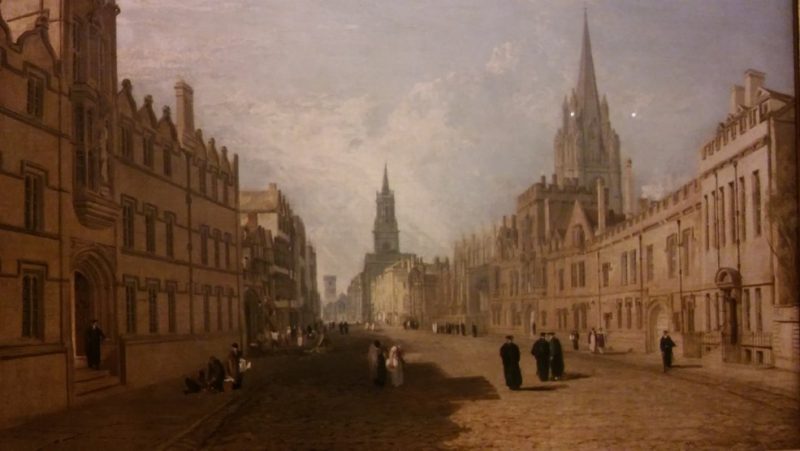
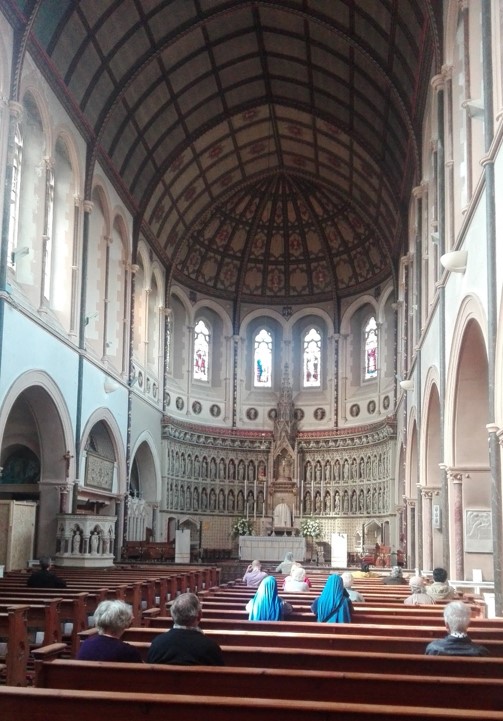
Most days we participated in the Holy Mass at the Oratory, the main Mass or a private Mass in one of the side chapels. In the back there was a small prie-dieu set up with candles and a replica of one of his most famous portraits as a shrine to Newman.
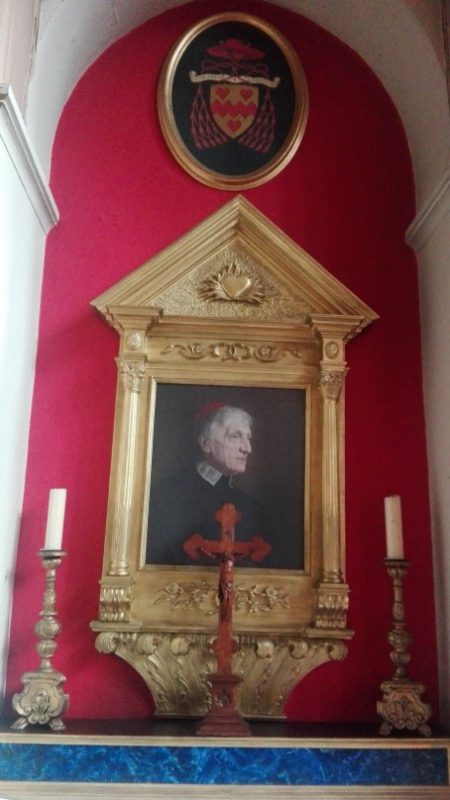
It was a way of witnessing in real time the process of the cult of the saints…a holy man was here. He died, but we remember him and his holiness. Now, we ask him to remember us – and light candles in front of his image to drive home the point.
We also daily passed the “Martyrs Memorial” at the end of St Giles just before the Ashmolean Museum. The Gothic grounded spire (very much like the 13th century “Eleanor Crosses”) was built in 1843 to renew the memories of the 16th century Anglican martyr-bishops known as the “Oxford Martyrs” (Hugh Latimer, Nicholas Ridley and Thomas Cranmer, the Archbishop of Canterbury). These Reformation leaders were burned at the stake for heresy in 1555 and 1556 during the Catholic reign of Queen Mary Tudor. The delayed effort to honor them came about only in the 19th Century as a response to the perceived threat of Catholicism being advanced by the Tractarian Movement. The monument went up just two years before John Henry Newman came into the Catholic Church in 1845. He stood out as one of the most high-profile converts of the age. (Perhaps we too may consider Gavin Ashenden the former chaplain to the royal family who was received into full communion with the Catholic Church just before Christmas 2019…and others treading the path from Canterbury to Rome.)
Next, we would turn left onto High Street and pass the beautiful Church of Saint Mary the Virgin.
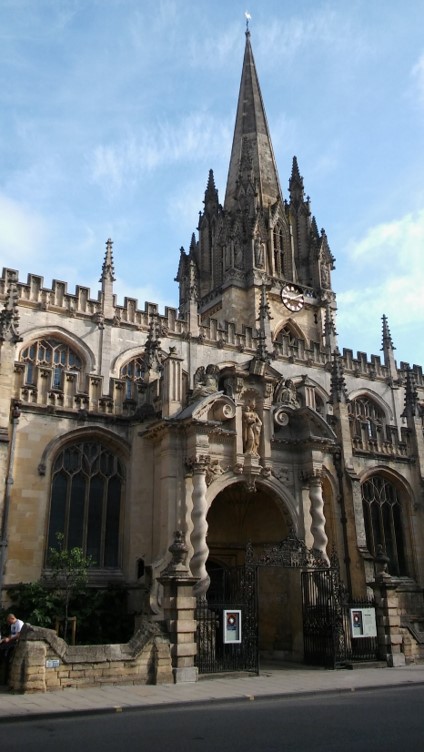
This church was the central chapel for generations of Oxford students. Located next to the old part of the Bodleian Library, it still bears a special closeness to students (and their bicycles).

During midday break from the Conference I usually went there for a time of prayer in the Mary Chapel.
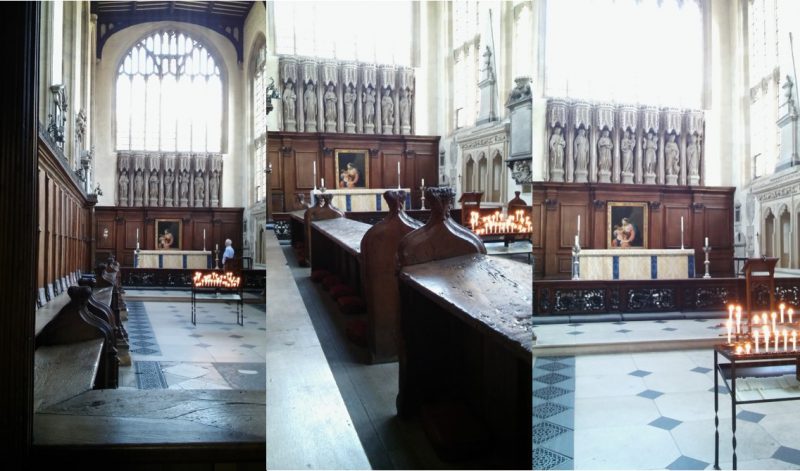
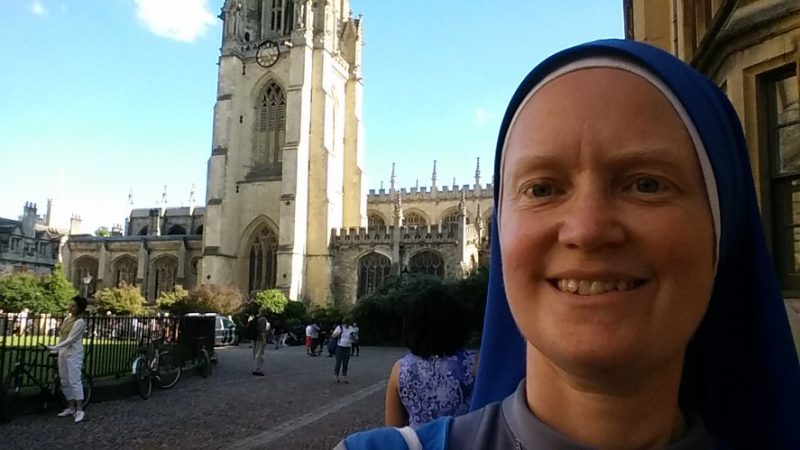
This church was especially dear to St John Henry Newman from the time of his own student days to his long service as vicar (1828-1843) following his 1825 ordination to the Anglican priesthood. The column leading up to the raised pulpit bears a bronze marker in his honor placed there on the occasion of his beatification in 2011.

He preached many beautiful homilies from that spot, and prayed in the Mary Chapel of the apse during the years leading up to his entrance into full communion with the ancient Catholic Church.
In Saint Peter’s Square this past October he was canonized, named a saint of the Universal Church. Prince Charles not only attended the canonization, but also met privately with the Pope, and visited the Venerable English College where hundreds of English Catholic men went into exile to prepare for the priesthood—and often for martyrdom, as well. (How times have changed!)
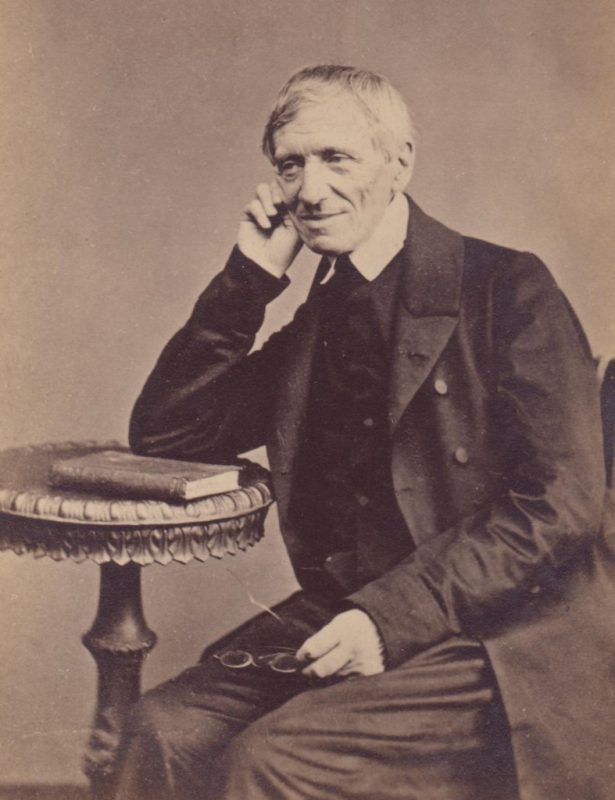
But far beyond the historical, political, and even ecclesiological dimensions of John Henry Newman, there stands a brilliant mind and a gentle soul. This is the saint who goes far beyond the limits of Oxford, of Birmingham, even of Rome.
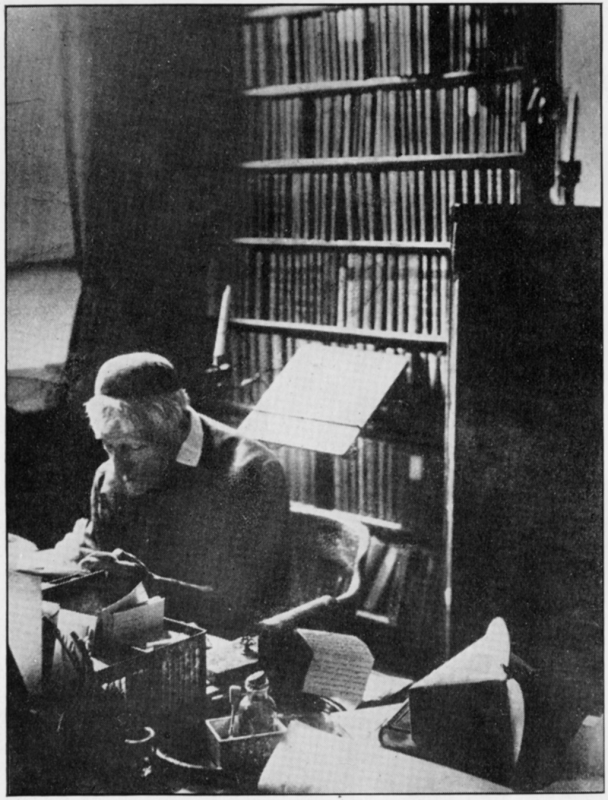
May he be a special patron to all those who commit to the intellectual apostolate of study—whether during their student years, or as a scholarly “way of life” in the academy.
St John Henry Newman, intercede for us to grant us strength and endurance to make the journey to Truth, like the Magi of old who made great sacrifices to follow Truth and who lay down their treasures at His feet in the cave of Bethlehem.
A Blessed Epiphanytide to all as we await the Baptism of the Lord (and promise of spring)!
Sr. Maria Theotókos Adams, SSVM