Feast of the Transfiguration of Our Lord
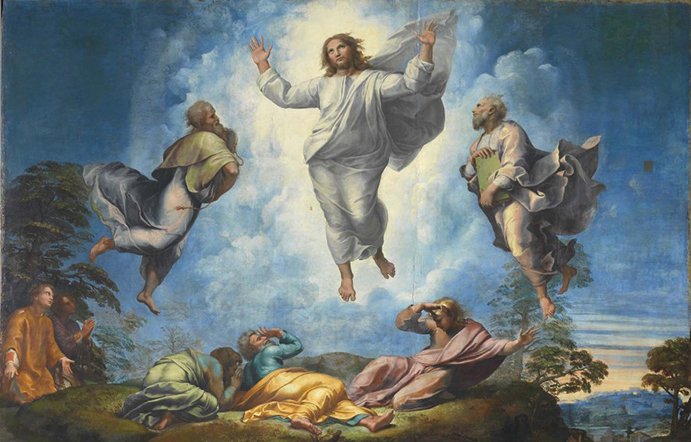
Today the Church celebrates the Feast of the Transfiguration of Our Lord. In light of this particular mystery of Christ’s life, the Church emphasizes the significance of consecrated life.
In addition, this celebration is of particular importance for our Religious Family of the Incarnate Word, as our Directory of Spirituality says: “The miracle of the transfiguration…reminds us of the specific purpose of our small religious family: to evangelize the culture – to transfigure it into Christ.”
The Apostolic Exhortation of St. John Paul II, Vita Consecrata (1996), shows the vocation of consecrated life through a profound contemplation of the Transfiguration. Below are some excerpts from this document.
Matthew 17: 1-9
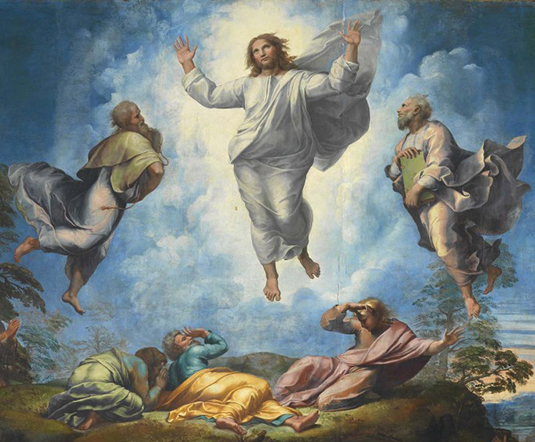
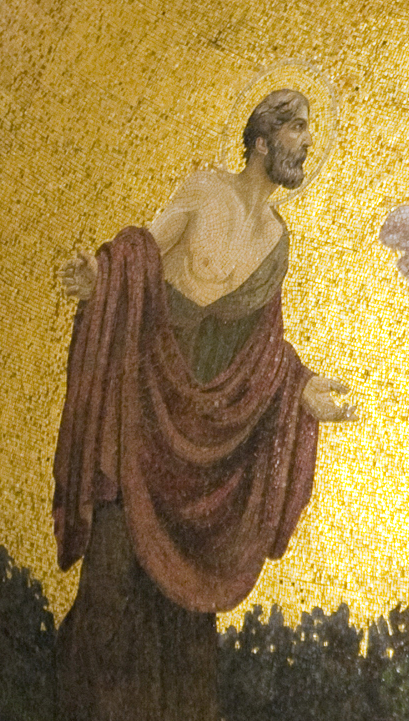
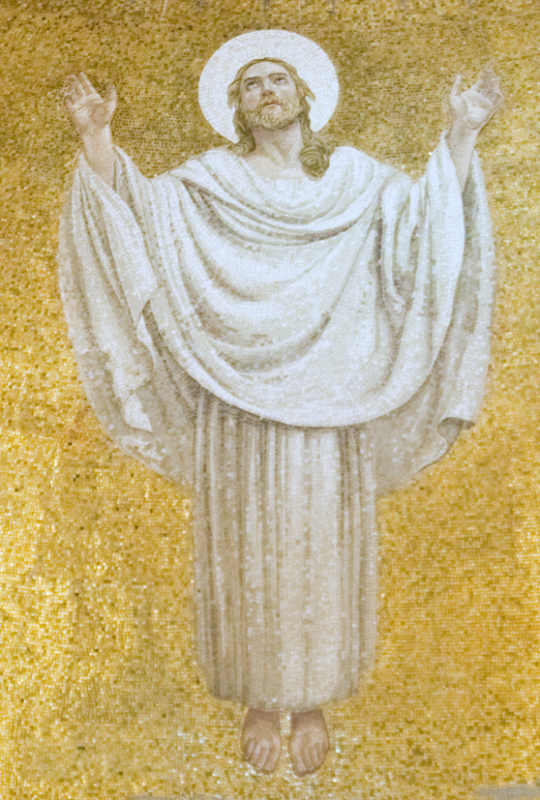
And after six days Jesus took with him Peter and James and John his brother, and led them up a high mountain apart. And he was transfigured before them, and his face shone like the sun, and his garments became white as light. And behold, there appeared to them Moses and Elijah, talking with him. And Peter said to Jesus, “Lord, it is well that we are here; if you wish, I will make three booths here, one for you and one for Moses and one for Elijah”. He was still speaking, when lo, a bright cloud overshadowed them, and a voice from the cloud said, “This is my beloved Son, with whom I am well pleased; listen to him”. When the disciples heard this, they fell on their faces, and were filled with fear. But Jesus came and touched them, saying, “Rise, and have no fear”. And when they lifted up their eyes, they saw no one but Jesus only. And as they were coming down the mountain, Jesus commanded them, “Tell no one the vision, until the Son of man is raised from the dead.”
From Vita Consecrata (1996):
14. The evangelical basis of consecrated life is to be sought in the special relationship which Jesus, in his earthly life, established with some of his disciples. He called them not only to welcome the Kingdom of God into their own lives, but also to put their lives at its service, leaving everything behind and closely imitating his own way of life.
Many of the baptized throughout history have been invited to live such a life “in the image of Christ”. But this is possible only on the basis of a special vocation and in virtue of a particular gift of the Spirit […]
In the Gospel, many of Christ’s words and actions shed light on the meaning of this special vocation. But for an overall picture of its essential characteristics, it is singularly helpful to fix our gaze on Christ’s radiant face in the mystery of the Transfiguration […], for the Transfiguration is not only the revelation of Christ’s glory but also a preparation for facing Christ’s Cross. It involves both “going up the mountain” and “coming down the mountain”. The disciples who have enjoyed this intimacy with the Master, surrounded for a moment by the splendour of the Trinitarian life and of the communion of saints, and as it were caught up in the horizon of eternity, are immediately brought back to daily reality, where they see “Jesus only”, in the lowliness of his human nature, and are invited to return to the valley, to share with him the toil of God’s plan and to set off courageously on the way of the Cross.
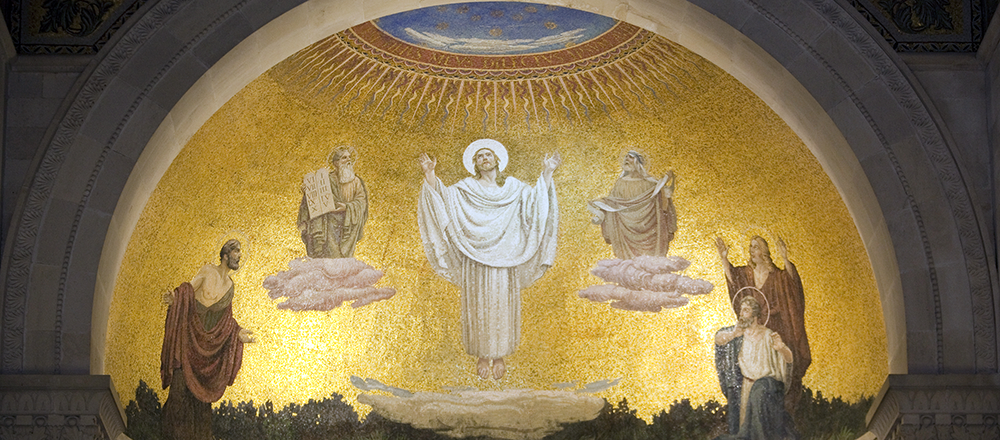
15. […] The event of the Transfiguration marks a decisive moment in the ministry of Jesus. It is a revelatory event which strengthens the faith in the disciples’ hearts, prepares them for the tragedy of the Cross and prefigures the glory of the Resurrection. This mystery is constantly relived by the Church, the people on its way to the eschatological encounter with its Lord. Like the three chosen disciples, the Church contemplates the transfigured face of Christ in order to be confirmed in faith and to avoid being dismayed at his disfigured face on the Cross. In both cases, she is the Bride before her Spouse, sharing in his mystery and surrounded by his light.
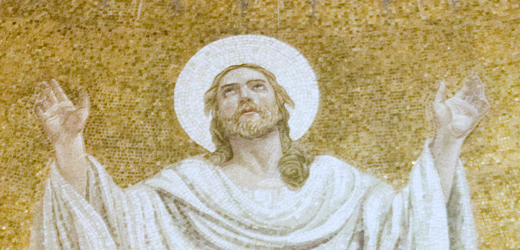
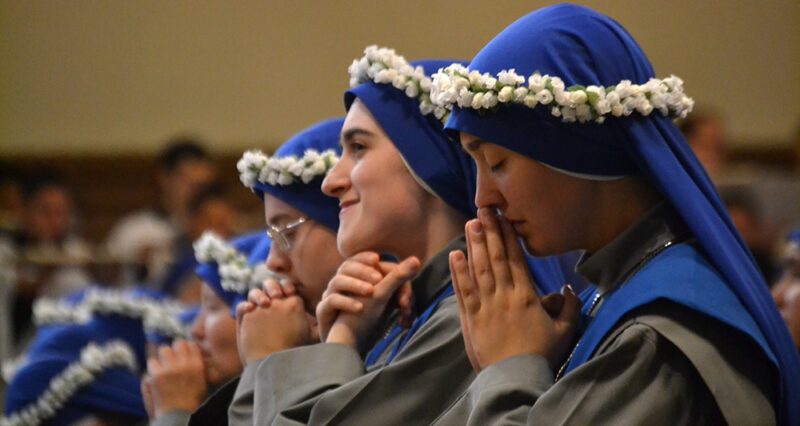
This light shines on all the Church’s children. All are equally called to follow Christ, to discover in him the ultimate meaning of their lives, until they are able to say with the Apostle: “For to me to live is Christ” (Phil 1:21). But those who are called to the consecrated life have a special experience of the light which shines forth from the Incarnate Word. For the profession of the evangelical counsels makes them a kind of sign and prophetic statement for the community of the brethren and for the world; consequently they can echo in a particular way the ecstatic words spoken by Peter: “Lord, it is well that we are here” (Mt 17:4). These words bespeak the Christocentric orientation of the whole Christian life. But they also eloquently express the radical nature of the vocation to the consecrated life: how good it is for us to be with you, to devote ourselves to you, to make you the one focus of our lives! Truly those who have been given the grace of this special communion of love with Christ feel as it were caught up in his splendour: he is “the fairest of the sons of men” (Ps 45:2), the One beyond compare.
“This is my beloved Son”: listen to him!
16. The three disciples caught up in ecstasy hear the Father’s call to listen to Christ, to place all their trust in him, to make him the centre of their lives. The words from on high give new depth to the invitation by which Jesus himself, at the beginning of his public life, called them to follow him, to leave their ordinary lives behind and to enter into a close relationship to him. It is precisely this special grace of intimacy which, in the consecrated life, makes possible and even demands the total gift of self in the profession of the evangelical counsels. The counsels, more than a simple renunciation, are a specific acceptance of the mystery of Christ, lived within the Church. […]
By professing the evangelical counsels, consecrated persons not only make Christ the whole meaning of their lives but strive to reproduce in themselves, as far as possible, “that form of life which he, as the Son of God, accepted in entering this world” (Lumen Gentium, 1). By embracing chastity, they make their own the pure love of Christ and proclaim to the world that he is the Only-Begotten Son who is one with the Father (cf. Jn 10:30, 14:11). By imitating Christ’s poverty, they profess that he is the Son who receives everything from the Father, and gives everything back to the Father in love (cf. Jn 17:7, 10). By accepting, through the sacrifice of their own freedom, the mystery of Christ’s filial obedience, they profess that he is infinitely beloved and loving, as the One who delights only in the will of the Father (cf. Jn 4:34), to whom he is perfectly united and on whom he depends for everything.
By this profound “configuration” to the mystery of Christ, the consecrated life brings about in a special way that confessio Trinitatis which is the mark of all Christian life; it acknowledges with wonder the sublime beauty of God, Father, Son and Holy Spirit, and bears joyful witness to his loving concern for every human being.
“A Patre ad Patrem”: God’s initiative
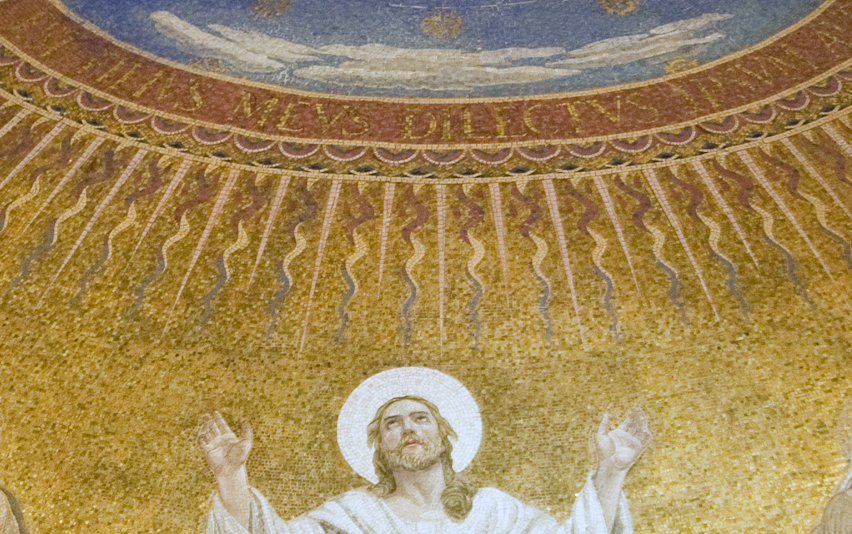
17. Contemplation of the glory of the Lord Jesus in the icon of the Transfiguration reveals to consecrated persons first of all the Father, the Creator and Giver of every good thing, who draws his creatures to himself (cf. Jn 6:44) with a special love and for a special mission. “This is my beloved Son: listen to him!” (cf. Mt 17:5). In response to this call and the interior attraction which accompanies it, those who are called entrust themselves to the love of God who wishes them to be exclusively at his service, and they consecrate themselves totally to him and to his plan of salvation (cf. 1 Cor 7:32-34).
This is the meaning of the call to the consecrated life: it is an initiative coming wholly from the Father (cf. Jn 15:16), who asks those whom he has chosen to respond with complete and exclusive devotion. The experience of this gracious love of God is so deep and so powerful that the person called senses the need to respond by unconditionally dedicating his or her life to God, consecrating to him all things present and future, and placing them in his hands. This is why, with Saint Thomas, we come to understand the identity of the consecrated person, beginning with his or her complete self-offering, as being comparable to a genuine holocaust.
“Per Filium”: in the footsteps of the Son
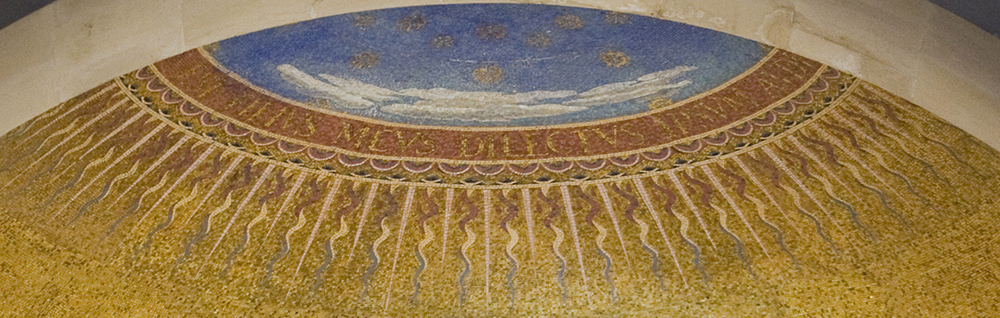
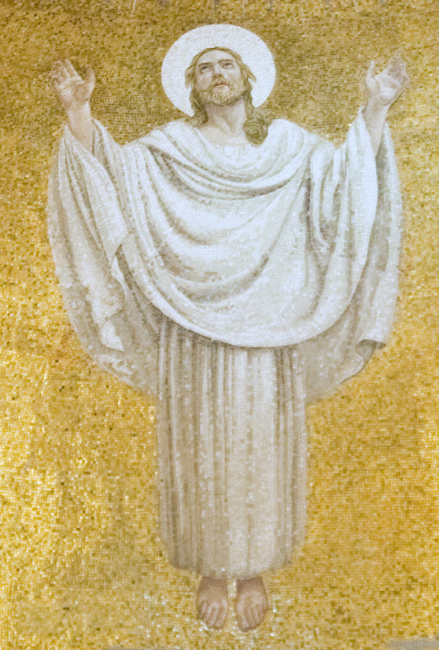
18. The Son, who is the way which leads to the Father (cf. Jn 14:6), calls all those whom the Father has given to him (cf. Jn 17:9) to make the following of himself the whole purpose of their lives. But of some, those called to the consecrated life, he asks a total commitment, one which involves leaving everything behind (cf. Mt 19:27) in order to live at his side and to follow him wherever he goes (cf. Rev 14:4).
In the countenance of Jesus, the “image of the invisible God” (Col 1:15) and the reflection of the Father’s glory (cf. Heb 1:3), we glimpse the depths of an eternal and infinite love which is at the very root of our being. Those who let themselves be seized by this love cannot help abandoning everything to follow him (cf. Mk 1:16-20; 2:14; 10:21, 28). Like Saint Paul, they consider all else as loss “because of the surpassing worth of knowing Jesus Christ”, by comparison with which they do not hesitate to count all things as “refuse”, in order that they “may gain Christ” (Phil 3:8). They strive to become one with him, taking on his mind and his way of life. This leaving of everything and following the Lord (cf. Lk 18:28) is a worthy programme of life for all whom he calls, in every age.
The evangelical counsels, by which Christ invites some people to share his experience as the chaste, poor and obedient One, call for and make manifest in those who accept them an explicit desire to be totally conformed to him. Living “in obedience, with nothing of one’s own and in chastity” (Rule of St. Francis of Assisi), consecrated persons profess that Jesus is the model in whom every virtue comes to perfection. His way of living in chastity, poverty and obedience appears as the most radical way of living the Gospel on this earth, a way which may be called divine, for it was embraced by him, God and man, as the expression of his relationship as the Only-Begotten Son with the Father and with the Holy Spirit. This is why Christian tradition has always spoken of the objective superiority of the consecrated life.
Nor can it be denied that the practice of the evangelical counsels is also a particularly profound and fruitful way of sharing in Christ’s mission, in imitation of the example of Mary of Nazareth, the first disciple, who willingly put herself at the service of God’s plan by the total gift of self. Every mission begins with the attitude expressed by Mary at the Annunciation: “Behold, I am the handmaid of the Lord; let it be done to me according to your word” (Lk 1:38).
“In Spiritu”: consecrated by the Holy Spirit
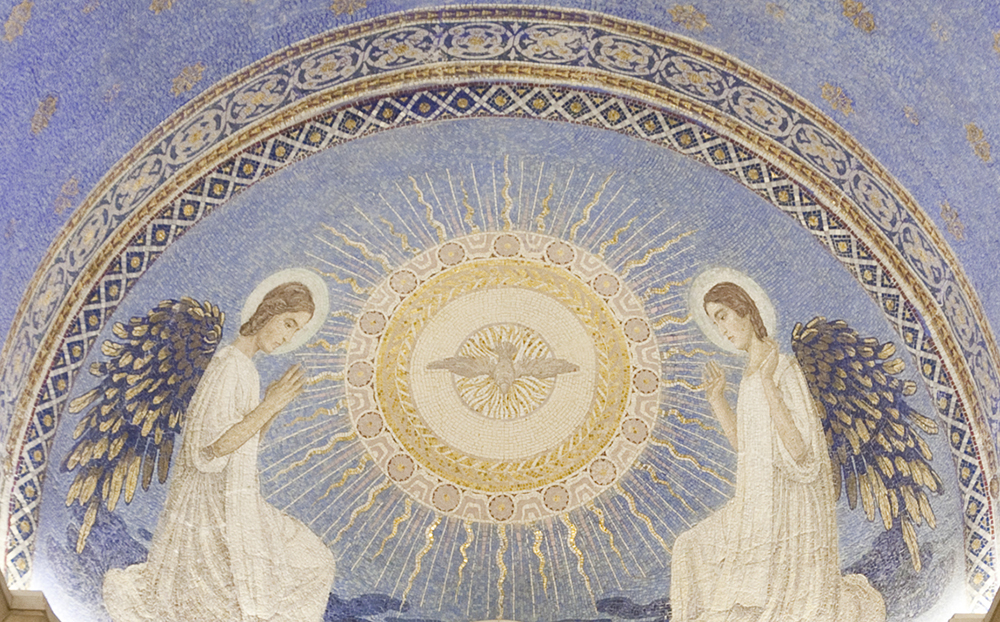
19. “A bright cloud overshadowed them” (Mt 17:5). A significant spiritual interpretation of the Transfiguration sees this cloud as an image of the Holy Spirit.
Like the whole of Christian life, the call to the consecrated life is closely linked to the working of the Holy Spirit. In every age, the Spirit enables new men and women to recognize the appeal of such a demanding choice. Through his power, they relive, in a way, the experience of the Prophet Jeremiah: “You have seduced me, Lord, and I have let myself be seduced” (Jer 20:7). It is the Spirit who awakens the desire to respond fully; it is he who guides the growth of this desire, helping it to mature into a positive response and sustaining it as it is faithfully translated into action; it is he who shapes and moulds the hearts of those who are called, configuring them to Christ, the chaste, poor and obedient One, and prompting them to make his mission their own. By allowing themselves to be guided by the Spirit on an endless journey of purification, they become, day after day, conformed to Christ, the prolongation in history of a special presence of the Risen Lord.
With penetrating insight, the Fathers of the Church have called this spiritual path philokalia, or love of the divine beauty, which is the reflection of the divine goodness. Those who by the power of the Holy Spirit are led progressively into full configuration to Christ reflect in themselves a ray of the unapproachable light. During their earthly pilgrimage, they press on towards the inexhaustible Source of light. The consecrated life thus becomes a particularly profound expression of the Church as the Bride who, prompted by the Spirit to imitate her Spouse, stands before him “in splendour, without spot or wrinkle or any such thing, that she might be holy and without blemish” (Eph 5:27). […]
From Tabor to Calvary
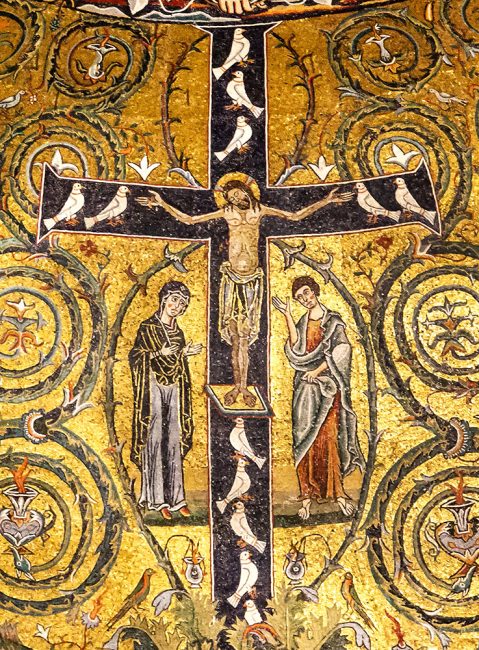
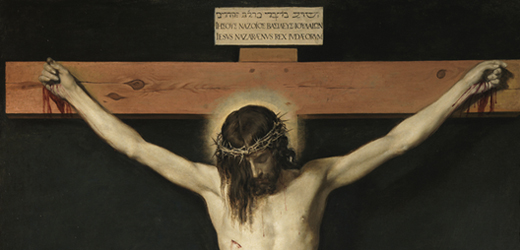
23. The dazzling event of the Transfiguration is a preparation for the tragic, but no less glorious, event of Calvary. Peter, James and John contemplate the Lord Jesus together with Moses and Elijah, with whom, according to the Evangelist Luke, Jesus speaks “of his departure, which he was to accomplish at Jerusalem” (9:31). The eyes of the Apostles are therefore fixed upon Jesus who is thinking of the Cross (cf. Lk 9:43-45). There his virginal love for the Father and for all mankind will attain its highest expression. His poverty will reach complete self-emptying, his obedience the giving of his life.

The disciples are invited to contemplate Jesus raised up on the Cross, where, in his silence and solitude, “the Word come forth from silence” (St. Ignatius of Antioch) prophetically affirms the absolute transcendence of God over all created things; in his own flesh he conquers our sin and draws every man and every woman to himself, giving to all the new life of the Resurrection (cf. Jn 12:32; 19:34, 37). It is in the contemplation of the Crucified Christ that all vocations find their inspiration. From this contemplation, together with the primordial gift of the Spirit, all gifts, and in particular the gift of the consecrated life, take their origin.
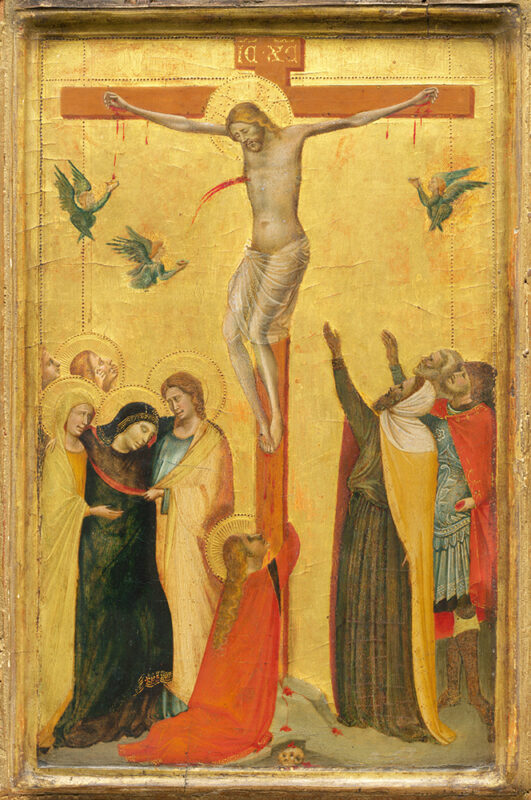
After Mary, the Mother of Jesus, it is John who receives this gift. John is the disciple whom Jesus loved, the witness who together with Mary stood at the foot of the Cross (cf. Jn 19:26-27). His decision to consecrate himself totally is the fruit of the divine love which envelops him, sustains him and fills his heart. John, together with Mary, is among the first in a long line of men and women who, from the beginning of the Church until the end, are touched by God’s love and feel called to follow the Lamb, once sacrificed and now alive, wherever he goes (cf. Rev 14:1-5).